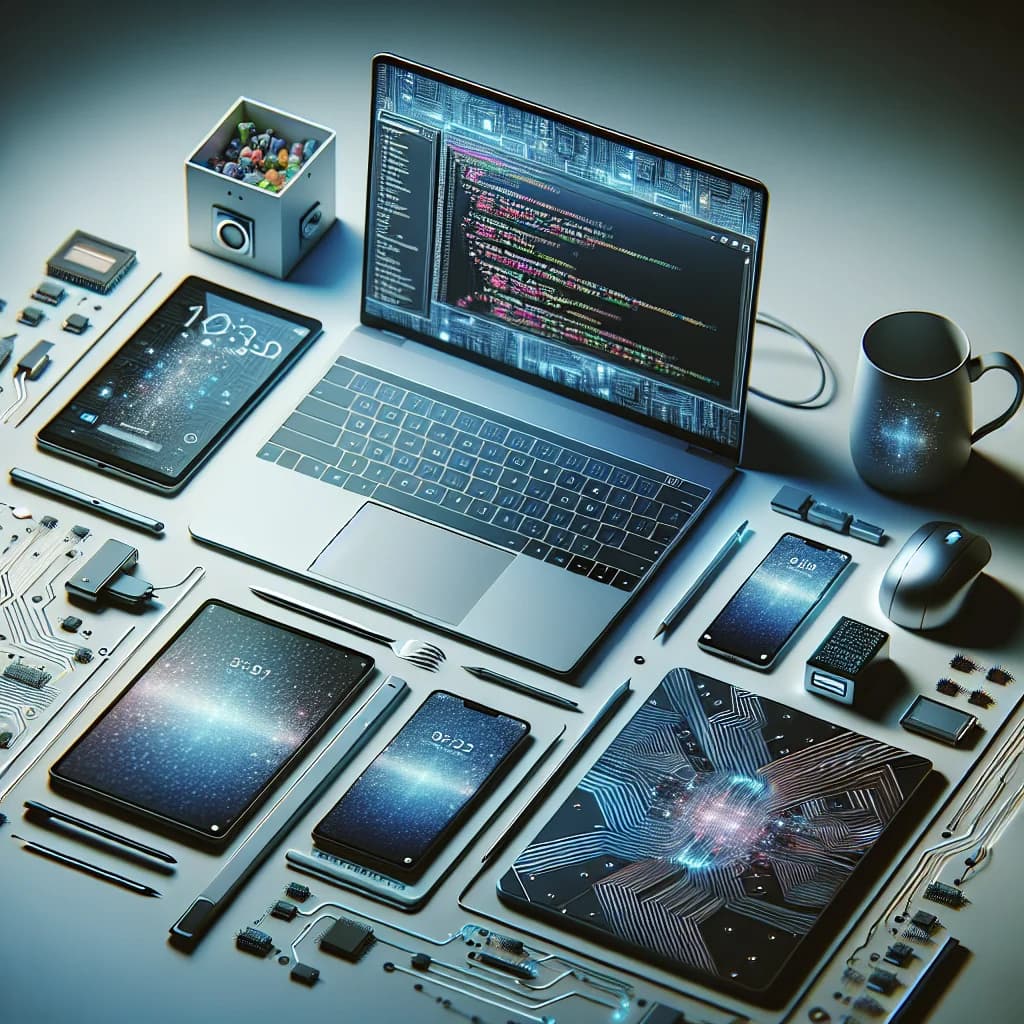
Exploring the Latest Innovations in Computers, Electronics, and Technology
Discover the cutting-edge innovations in computers, electronics, and technology that are shaping our future. Stay updated with the latest trends and breakthroughs!
Introduction to Computers and Electronics
Computers and electronics have become an intrinsic part of our daily lives, revolutionizing the way we communicate, work, and entertain ourselves. From the rudimentary machines of the past to the sophisticated devices of today, the journey of computers and electronics is a fascinating tale of innovation, creativity, and societal impact.
History of Computers
The history of computers dates back to the early 19th century with the invention of the mechanical calculator by Charles Babbage. However, it wasn't until the mid-20th century that electronic computers began to emerge. The first electronic computer, the ENIAC (Electronic Numerical Integrator and Computer), was developed in 1945, marking the beginning of the computer age.
Throughout the decades, computers have evolved rapidly. The introduction of transistors in the 1950s replaced vacuum tubes, leading to smaller and more efficient machines. The 1970s witnessed the rise of microprocessors, which combined the functions of a computer's CPU on a single chip, paving the way for personal computers in the 1980s. The advent of the internet in the 1990s further transformed computers, enabling global connectivity and the sharing of information on an unprecedented scale.
Evolution of Electronics
Electronics, as a field, has undergone significant transformations since its inception. The early developments were largely focused on basic components such as resistors, capacitors, and diodes. The invention of the transistor in 1947 by John Bardeen, Walter Brattain, and William Shockley was a pivotal moment in electronics, leading to the miniaturization of electronic devices.
As technology advanced, the integration of electronic components became more complex. Integrated circuits (ICs) emerged in the 1960s, allowing multiple electronic components to be combined onto a single chip. This innovation led to the development of more compact and powerful devices, from radios to televisions and eventually to computers and smartphones.
Impact on Society
The impact of computers and electronics on society is profound. They have transformed industries, enhanced communication, and changed the way we access information. In education, computers facilitate learning through interactive software and online resources. In healthcare, electronic medical records and telemedicine improve patient care and accessibility.
Moreover, the electronics industry has created millions of jobs, driving economic growth worldwide. However, this rapid advancement has also raised concerns regarding job displacement due to automation and the digital divide that separates those with access to technology from those without.
Core Components of Computers
Understanding the core components of computers is essential for grasping how they function and the role they play in modern technology.
Central Processing Unit (CPU)
The CPU, often referred to as the brain of the computer, is responsible for executing instructions and processing data. It performs basic arithmetic, logic, control, and input/output operations specified by the instructions in the program. Modern CPUs are multi-core, meaning they can perform multiple operations simultaneously, significantly enhancing computing power.
Key characteristics of CPUs include:
- Clock Speed:Measured in gigahertz (GHz), this determines how many cycles per second the CPU can execute.
- Core Count:More cores allow for better multitasking and improved performance in multi-threaded applications.
- Cache Memory:A small amount of high-speed memory located within the CPU that stores frequently accessed data for quick retrieval.
Memory and Storage
Memory and storage are crucial for a computer's performance. While often used interchangeably, they serve different purposes:
- RAM (Random Access Memory):This is the computer's short-term memory, which stores data that is actively being used or processed. More RAM typically leads to better multitasking capabilities.
- Storage Devices:These include hard disk drives (HDDs) and solid-state drives (SSDs). HDDs use spinning disks to read/write data, while SSDs use flash memory for faster access speeds and reliability.
Modern computers often utilize a combination of both RAM and storage devices to optimize performance and efficiency.
Motherboards and Peripherals
The motherboard is the main circuit board that connects all components of a computer, including the CPU, memory, storage, and peripherals. It houses the chipset, which manages data transfer between the CPU and other components. A well-designed motherboard can significantly enhance a computer's performance.
Peripherals are external devices that connect to the computer, such as keyboards, mice, printers, and monitors. They allow users to interact with the computer and expand its capabilities. The rise of USB and wireless technology has made it easier to connect and disconnect peripherals as needed.
Advancements in Technology
The field of technology is constantly evolving, with significant advancements shaping the future of computers and electronics.
Artificial Intelligence and Machine Learning
Artificial Intelligence (AI) refers to the development of computer systems that can perform tasks that typically require human intelligence, such as visual perception, speech recognition, and decision-making. Machine Learning (ML), a subset of AI, involves the use of algorithms that allow computers to learn from and make predictions based on data.
The applications of AI and ML are vast, impacting sectors such as healthcare, finance, and entertainment. For example, AI-driven algorithms can analyze medical data to assist doctors in diagnosing diseases, while ML models can predict stock market trends based on historical data.
Quantum Computing
Quantum computing represents a significant leap from classical computing, utilizing the principles of quantum mechanics to process information. Unlike traditional bits that represent either 0 or 1, quantum bits (qubits) can exist in multiple states simultaneously, enabling quantum computers to solve complex problems much faster than classical computers.
Though still in its infancy, quantum computing has the potential to revolutionize fields such as cryptography, optimization, and drug discovery, pushing the boundaries of what is computationally possible.
Internet of Things (IoT)
The Internet of Things (IoT) refers to the interconnection of everyday objects to the internet, allowing them to send and receive data. This technology has transformed how we interact with our environment, from smart homes equipped with connected appliances to wearable health devices that monitor our fitness levels.
IoT devices collect vast amounts of data, enabling more efficient resource management and enhanced user experiences. However, this connectivity also raises concerns regarding security and data privacy, as more devices are susceptible to cyber-attacks.
Challenges in Electronics and Technology
As technology advances, several challenges emerge that need to be addressed to ensure sustainable development in the electronics and technology sectors.
Cybersecurity Threats
With increased connectivity comes the risk of cyberattacks. Cybersecurity threats, including malware, phishing, and ransomware, can compromise sensitive data and disrupt essential services. Organizations and individuals must adopt robust security measures to protect their information and infrastructure.
To combat these threats, cybersecurity strategies may include:
- Regular Software Updates:Keeping software and systems updated to patch vulnerabilities.
- Employee Training:Educating users about recognizing phishing attempts and safe online practices.
- Firewalls and Antivirus Software:Implementing protective measures to detect and prevent attacks.
E-Waste Management
The rapid turnover of electronic devices has resulted in significant electronic waste (e-waste), which poses environmental challenges. Improper disposal of e-waste can lead to hazardous materials leaching into the environment, affecting ecosystems and human health.
To address e-waste management, strategies include:
- Encouraging recycling programs to recover valuable materials from old devices.
- Promoting the repair and refurbishment of electronics to extend their lifespan.
- Implementing regulations for responsible disposal and recycling of e-waste.
Data Privacy Concerns
As technology becomes more integrated into our lives, data privacy has emerged as a significant concern. With the collection of vast amounts of personal data by companies and governments, individuals often feel vulnerable to surveillance and misuse of their information.
To enhance data privacy, the following measures can be considered:
- Transparency:Companies should be clear about how they collect, use, and store data.
- Data Protection Regulations:Governments can implement laws to safeguard personal information, such as the General Data Protection Regulation (GDPR) in the European Union.
- Consumer Awareness:Educating individuals about their rights regarding data privacy and encouraging them to take control over their information.
The Future of Computers and Electronics
The future of computers and electronics holds exciting possibilities as emerging technologies continue to reshape the landscape.
Emerging Technologies
Several emerging technologies are poised to impact the future of computers and electronics:
- Augmented Reality (AR) and Virtual Reality (VR):These technologies are set to enhance user experiences in gaming, education, and training by creating immersive environments.
- 5G Connectivity:The rollout of 5G networks will enable faster internet speeds and more reliable connections, facilitating the growth of IoT and smart cities.
- Biometrics:The use of biometric authentication methods, such as fingerprint and facial recognition, will enhance security in personal devices and systems.
Trends in Consumer Electronics
Consumer electronics are continually evolving, driven by advancements in technology and changing consumer preferences. Key trends include:
- Smart Home Devices:The demand for smart home technologies, such as smart speakers and connected appliances, is on the rise as consumers seek convenience and energy efficiency.
- Wearable Technology:Devices like smartwatches and fitness trackers are becoming increasingly popular, allowing users to monitor their health and stay connected on the go.
- Sustainable Electronics:There is a growing emphasis on eco-friendly electronics, with manufacturers focusing on sustainable materials and practices to minimize environmental impact.
Predictions for the Next Decade
Looking ahead, several predictions can be made about the future of computers and electronics:
- AI will become more integrated into everyday applications, enhancing efficiency and user experiences across various sectors.
- Quantum computing will begin to solve complex problems that are currently infeasible for classical computers, opening new possibilities in research and industry.
- The IoT ecosystem will expand, with billions of devices interconnected, leading to smarter cities and improved resource management.
- Cybersecurity will evolve to address emerging threats, with advanced technologies such as AI-driven security systems becoming commonplace.
As we embrace these advancements, it is crucial to address the accompanying challenges to ensure a sustainable and equitable future for all.
Written by Abdul Qudoos
Content creator and writer passionate about sharing knowledge.
View all posts →